
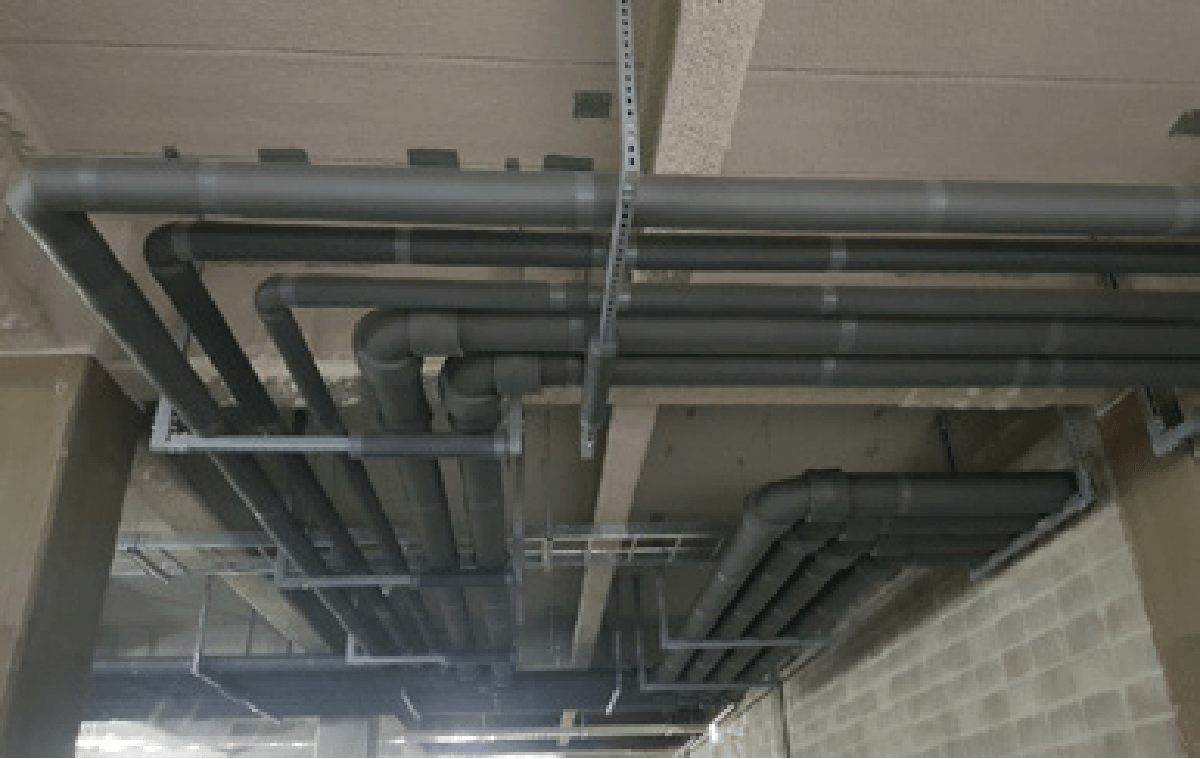
Chilled-water systems are designed to move cooling energy efficiently between chillers, pumps, AHUs and terminal equipment. The insulation around the pipework plays an equally important role in maintaining system performance.
Chiller pipe rubber insulation is commonly specified using flexible closed-cell elastomeric foam.
Scudoflex NBR is designed for chilled-water pipework, HVAC systems and refrigeration applications, combining low thermal conductivity with high moisture-vapour resistance.
Why chilled-water pipes need insulation
A chilled-water pipe can operate below the surrounding air's dew point.
Without adequate insulation, heat enters the pipe and condensation can develop on the external surface.
A suitable insulation system helps:
- Reduce heat gain
- Control condensation
- Maintain chilled-water system efficiency
- Protect surrounding finishes
- Reduce moisture-related maintenance
- Improve overall system performance
NBR rubber insulation for chillers
NBR, or nitrile butadiene rubber foam, is a flexible elastomeric insulation material widely used for HVAC and refrigeration applications.
Scudoflex NBR is a closed-cell elastomeric foam with reported thermal conductivity of 0.032 W/m·K at 10°C and vapour diffusion resistance greater than 17,000.
This combination is particularly relevant when condensation control is part of the project specification.
What thickness should be used?
There is no single insulation thickness suitable for every chiller installation.
The specification should consider:
- Chilled-water temperature
- Pipe diameter
- Ambient temperature
- Relative humidity
- Indoor or outdoor location
- Required surface temperature
- Condensation-control requirement
- Energy-efficiency objectives
- Local project standards
For this reason, consultants and contractors should select thickness using project calculations and the manufacturer's technical information rather than choosing a thickness solely because it is commonly used.
Chiller pipe insulation in Lahore, Islamabad and Karachi
Pakistan's major commercial centres have different environmental conditions.
Lahore: HVAC installations can experience high summer temperatures and humid conditions.
Islamabad / Rawalpindi: Seasonal temperature variation means insulation specifications may need to accommodate both cooling and heating services.
Karachi: The coastal environment makes moisture management and appropriate external protection particularly important.
The material should therefore be selected based on actual service conditions.
Installation checklist
Before handing over a chilled-water insulation installation, inspect:
- Pipe joints
- Longitudinal seams
- Butt joints
- Pipe supports
- Valves
- Flanges
- Strainers
- Pumps
- Branch connections
- Equipment connections
- Penetrations
- External protection
Scudoflex provides NBR in tube, roll and sheet formats, allowing different components of a mechanical installation to be insulated using compatible material formats.
Specification information
A proper RFQ should include:
Product: Scudoflex NBR or approved equivalent Material: Closed-cell elastomeric NBR foam Application: Chilled-water pipework Diameter: Project-specific Thickness: Project calculation/specification Facing: Unfaced / aluminium foil / glass fabric as required Performance: Refer to current Scudoflex technical datasheet
For projects in Lahore, Islamabad, Rawalpindi and Karachi, technical support should be requested when unusual temperatures, outdoor exposure or specialist mechanical services are involved.